UK NFL Betting Regulation: UKGC Legal Requirements
 Available in US
Most UK punters know, in an abstract sense, that their sportsbook is regulated. They’ve seen the Gambling Commission logo. They know they had to verify their identity. But the specifics of what that regulation actually requires . What it means for how a bookmaker can treat you, what rights you have as a customer, and what the concrete obligations are around things like affordability checks and account restrictions: those details are less well understood, and they matter more than most people appreciate when something goes wrong.
The UK gambling market is one of the most comprehensively regulated in the world. Total market gross gambling yield reached £16.8 billion in the year to March 2025, according to the Gambling Commission’s Annual Report, a 7.3% increase year-on-year, with the online sector (which includes sports betting) accounting for 46% of the total at £7.8 billion. That commercial scale is both why the UK has a robust regulatory framework and why it needs one.
The Gambling Commission’s own CEO, Andrew Rhodes, noted explicitly in January 2026 that NFL is among the sports “growing in use” at UK sportsbooks, alongside cricket and basketball. That means NFL betting is not a marginal niche; it’s a visible and growing part of the regulated UK betting market, subject to exactly the same protections and obligations that apply to football, horseracing, and every other sport. This guide explains what those protections are and what they require from both sides of the betting relationship.
- Legality of NFL Betting Under UKGC Rules
- What the UK Gambling Commission Regulates and Why It Matters
- Affordability Checks: What UK Bookmakers Ask NFL Bettors and Why
- Responsible Gambling Tools Required by UKGC: Deposit Limits, Self-Exclusion and More
- Problem Gambling in the UK: Scale, Risks and Where to Get Support
- Betting Limits and Account Restrictions: What UK NFL Punters Should Know
- Gambling Act Review: Key Regulatory Changes Affecting NFL Bettors in 2025 and 2026
- Frequently Asked Questions
Legality of NFL Betting Under UKGC Rules
Unambiguously yes. NFL betting is legal in the UK for adults aged 18 and over, provided you use a sportsbook licensed by the UK Gambling Commission. The legal framework governing UK gambling is the Gambling Act 2005, which established the UKGC as the licensing and regulatory authority for all commercial gambling in Great Britain.
Under the Act, bookmakers must hold a valid UKGC operating licence to offer betting services to UK customers. That licence comes with ongoing compliance obligations around player protection, fair play, anti-money laundering, and advertising standards. Operators who fail to meet those obligations face financial penalties, licence suspensions, and in serious cases, criminal prosecution. The UKGC has pursued enforcement actions with increasing regularity and scale — Andrew Rhodes confirmed a 300% increase in criminal cases pursued as a regulator in a 2025 conference keynote, including cases around betting integrity and illegal gambling.
The practical implication for NFL bettors: when you bet with a UKGC-licensed sportsbook, you operate within a legal framework that gives you recourse if something goes wrong. The bookmaker cannot simply refuse to pay out a winning bet without grounds. Disputes can be escalated to the Independent Betting Adjudication Service (IBAS), which adjudicates complaints between punters and licensed operators. None of this protection exists if you use an unlicensed offshore operator — which is why licence status is the single non-negotiable criterion in choosing where to bet.
American football betting has never been restricted in the UK on sport-specific grounds. There’s no legislative or regulatory history of treating NFL differently from any other sport. The legal framework applies uniformly: is the operator licensed, is the punter 18+, and are the specific market mechanics compliant with UKGC rules on fair play and transparent terms? If yes to all three, the bet is straightforwardly legal.
What the UK Gambling Commission Regulates and Why It Matters
The UKGC doesn’t just issue licences and walk away. It’s an active ongoing regulator that monitors compliance, publishes industry statistics, conducts research into problem gambling, and issues guidance and periodically sanctions to licensed operators. Understanding what it actually does helps you understand what protection you have as a bettor.
The Commission sets the conditions that operators must meet to maintain their licence. These include technical standards (fair and transparent odds, no manipulation of outcomes), responsible gambling requirements (tools available to customers, mandatory training for staff), anti-money laundering controls (Know Your Customer processes, financial monitoring), and advertising restrictions (no targeting of vulnerable individuals or those under 18).
Regular industry statistics published by the UKGC provide transparency about the market that is genuinely unusual by international standards. The online sector’s active account data, betting volumes, and gross gambling yield figures are published quarterly; this is the source for data like the 13.5 million average monthly active accounts recorded in late 2025. That transparency creates accountability that benefits consumers.
Roughly half the adult UK population (just under 48%, per Andrew Rhodes speaking at the BGC AGM in early 2025) engages in some form of gambling regularly. That’s a very high participation rate, and it underlines why the regulatory framework matters at population scale rather than just for individual bettors. The UKGC’s approach recognises that it’s not trying to stop people from gambling, but to ensure that when they do, they’re doing so with proper protections in place.
For NFL bettors, the UKGC’s work shows up most tangibly in three areas: affordability checks, responsible gambling tools, and the dispute resolution system. Each of these is covered in detail in the sections below.
Affordability Checks: What UK Bookmakers Ask NFL Bettors and Why
This is the area of UK gambling regulation that has caused the most friction between punters and operators in recent years, and it’s worth explaining clearly because the rules changed meaningfully in early 2025 in ways that directly affect how much you can bet before you’re asked for documentation.
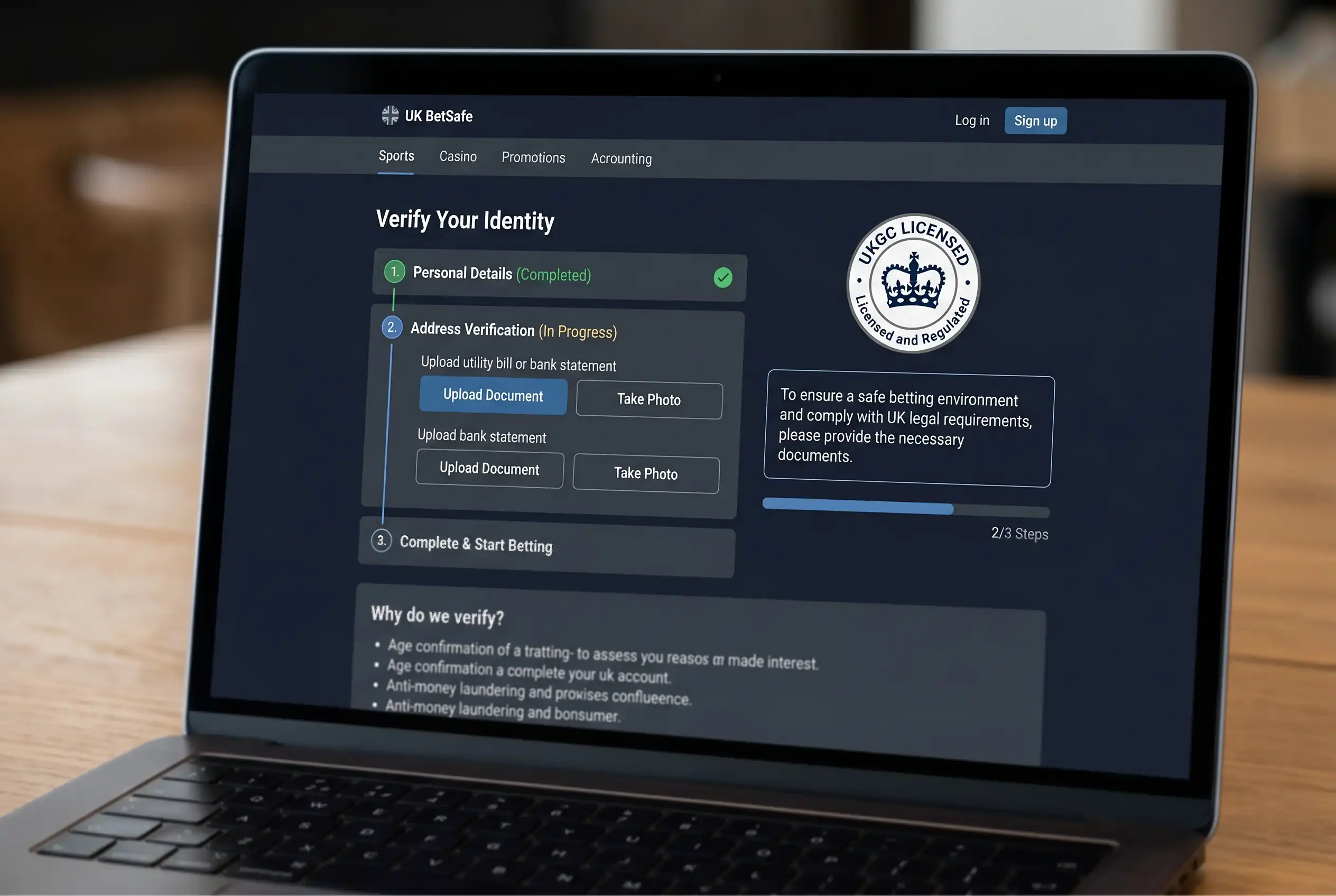
From 28 February 2025, UKGC requirements mandate that licensed operators conduct enhanced affordability checks (including, in some cases, requesting evidence of income and financial circumstances) for customers whose net deposits exceed £150 per month. This threshold was lowered from the initial implementation figure of £500 per month that was introduced in August 2024. The stated rationale is harm prevention: identifying customers who may be betting beyond their means before the damage compounds.
What does this mean in practice for an NFL bettor? If you’re placing moderate bets across a season (a weekly spread bet, some player props, a few bigger stakes on key games) you may encounter a request for income verification at some point. This could take the form of a request to upload bank statements, payslips, or other evidence of income. The request doesn’t mean you’re suspected of anything: it’s a compliance-driven process triggered by volume thresholds.
The honest assessment: these checks create friction, and that frustration is real. But the regulatory rationale is grounded in genuine problem gambling data. The UKGC’s Gambling Survey for Great Britain (based on a sample of nearly 20,000 adults, the largest ever conducted) identified approximately 1.4 million people in the UK who meet the definition of problem gambling. That’s roughly 3% of the adult population. Affordability checks are one of the tools designed to catch financial harm earlier in its development.
The practical advice: be ready for these checks if you’re betting at significant volume. Having your documentation accessible in advance, rather than scrambling when a bet you want to place is blocked pending verification, prevents the frustrating experience of missing a game you’ve prepared for. Most UK sportsbooks process document uploads quickly, but “quickly” can still mean 24 to 48 hours if there are questions about submitted materials.
Responsible Gambling Tools Required by UKGC: Deposit Limits, Self-Exclusion and More
Every UKGC-licensed sportsbook is required to offer a range of responsible gambling tools to customers. These aren’t optional extras; they’re licence conditions. Knowing what tools exist and how to access them is useful even if you never intend to use them, because it tells you what the regulatory baseline looks like at any credible UK operator.
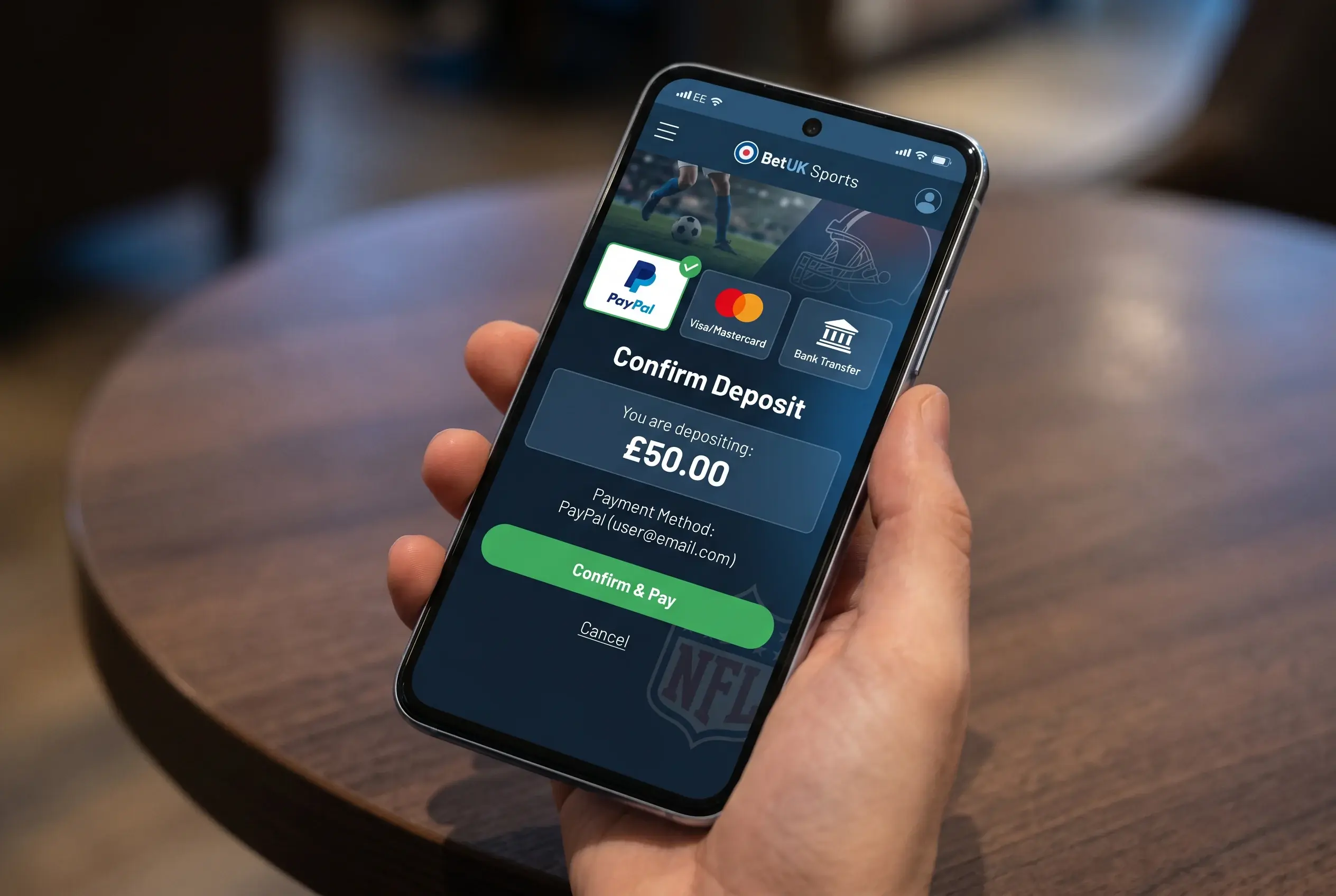
Deposit limits allow you to set a maximum amount you can deposit in a given period: daily, weekly, or monthly. Once set, limits can be increased only after a cooling-off period (typically 24 to 48 hours), but can be reduced immediately. This asymmetry is intentional: making it easy to restrict and harder to extend prevents impulsive limit increases during a losing run.
Loss limits work similarly but cap the amount you can lose rather than deposit. Some platforms offer spend limits that combine deposits and withdrawals into a single ledger. Reality checks (notifications that pop up after a set period of play reminding you how long you’ve been betting and how much you’ve wagered) are mandatory at all licensed platforms.
Self-exclusion is the most significant tool available. If you believe your gambling has become problematic, you can self-exclude from a specific platform, which blocks your access for a minimum period (typically six months to five years) or permanently. The national GamStop scheme extends this across all UKGC-licensed operators simultaneously, so one registration excludes you from the entire UK-licensed market, not just a single bookmaker.
Timeout options allow shorter breaks without the formal commitment of self-exclusion. A 24-hour, 48-hour, or one-week timeout blocks your access temporarily, which can be useful during a bad run when you want to step away and reset without committing to a lengthy exclusion period.
Andrew Rhodes, speaking when publishing the 2025 annual gambling survey, was explicit about what operators should do with this data: “We strongly encourage operators to use this evidence to consider the risks within their own customer bases.” That’s not a vague aspiration; it’s a regulatory expectation that operators proactively monitor customer behaviour and intervene when patterns suggest risk, before the customer has to ask for help.
Problem Gambling in the UK: Scale, Risks and Where to Get Support
The data on problem gambling in the UK is more comprehensive than in almost any other country, and it paints a picture that’s worth understanding honestly. The Gambling Survey for Great Britain, published in 2025, found that approximately 1.4 million people meet the definition of problem gambling, nearly 3% of the adult population. This isn’t a marginal issue.
Sports betting (including NFL wagering) appears as one of the more common contexts for problematic gambling behaviour, alongside casino products and online slot machines. The demographic most at risk is young men: sports betting is heavily male-skewed, and the 25-34 age group shows the highest rates of at-risk behaviour. This is also, not coincidentally, the core demographic for NFL betting in the UK, where 68% of fans fall in the 18-44 bracket.
If you’re concerned about your own gambling, or a friend’s or family member’s, several organisations provide free, confidential support. GamCare operates a national helpline and online chat service. BeGambleAware offers resources for both gamblers and those affected by someone else’s gambling. The National Gambling Treatment Service provides more intensive support including therapy for those whose gambling has become severely problematic. These services are funded by the gambling industry and are free to access.
One practical marker: if the amount you’re betting on NFL has increased significantly without a corresponding increase in the analytical work behind each bet, or if you’re chasing losses by placing bets you wouldn’t normally make, those are patterns worth paying attention to. The most common early warning signal of problematic sports betting is not the amount lost; it’s the change in the decision-making process that precedes the losses.
Betting Limits and Account Restrictions: What UK NFL Punters Should Know
Account restrictions (bookmakers limiting your maximum stake, restricting you from specific markets, or requiring manual review of your bets before they’re accepted) are legal under UK gambling law and are common practice across the industry. Understanding how and why they happen prepares you for an experience that surprises many punters who are otherwise doing everything right.
Bookmakers are commercial entities and are permitted to decline business from customers they identify as unprofitable. The trigger is usually a pattern of consistent profitability, particularly on markets that require genuine analytical work like NFL player props, live in-play markets, or early lines on specific niche games. The irony is real: the better your analysis, the more likely you are to face restrictions at some platforms.
What options do you have? First, spread across multiple bookmakers so that restrictions at one platform don’t limit your overall access to markets. Second, consider that betting exchanges, where you bet against other punters rather than the bookmaker, operate on a commission model and don’t restrict winning accounts. They’re a genuinely different product from a traditional sportsbook but work very well for NFL spread and moneyline markets where liquidity is reasonable. Third, if you believe a restriction is being applied unfairly or without proper process, you can raise a formal complaint with the sportsbook and, if unresolved, escalate to IBAS.
The UKGC has noted the restriction issue as an area it monitors. While operators have the legal right to restrict customers, they must do so transparently and cannot do so in ways that are discriminatory or that breach the terms of their operating licence. In practice, this sets a floor on conduct rather than preventing restrictions entirely.
A note on bet-building and props specifically: these are the NFL markets where account restrictions most commonly appear for successful bettors. The lower liquidity in these markets means bookmakers react more quickly to punters who demonstrate consistent edge. If you bet primarily on mainstream spread and moneyline markets, restrictions are significantly less likely. The higher volume of action on these markets means your bets represent a smaller proportion of the bookmaker’s overall exposure, making them less of a priority to manage.
Gambling Act Review: Key Regulatory Changes Affecting NFL Bettors in 2025 and 2026
The Gambling Act 2005 was designed for a pre-smartphone, pre-in-play-betting world. The Government’s Gambling Act Review White Paper, published in 2023, initiated the most significant overhaul of UK gambling regulation in twenty years. Implementation of the White Paper’s recommendations has been rolling out through 2024 and 2025, with further changes expected through 2026.
The affordability check framework discussed above is one of the White Paper’s direct outputs. Others include strengthened marketing restrictions: operators face tighter limits on when and how they can advertise, with particular scrutiny on targeting younger audiences and on bonus structures that might encourage problematic behaviour. For NFL bettors, the most visible expression of this is around how welcome bonuses and free bet promotions are structured and communicated.
The White Paper also proposed a statutory levy on operators to fund gambling research, education, and treatment, replacing the previous voluntary system that the review found was insufficiently funded. This levy was introduced in 2024, creating a more sustainable funding base for the treatment services mentioned above.
Stake limits for online slots were introduced as part of the White Paper implementation. These don’t directly affect sports betting like NFL wagering, but they reflect the direction of regulatory travel: a framework willing to introduce product-level restrictions where harm evidence supports it. Sports betting remains outside stake limit regulation, but that’s an active area of discussion rather than a settled question.
For detailed guidance on which UK sportsbooks are UKGC-licensed and what verification processes look like in practice, the best NFL betting sites guide covers the practical application of these regulatory requirements at the major platforms.
Frequently Asked Questions
What happens if an unlicensed bookmaker takes my NFL bet in the UK?
If you bet with an unlicensed operator, you have no regulatory protection. The UKGC cannot investigate complaints against unlicensed operators, and IBAS adjudication applies only to licensed sportsbooks. An unlicensed operator could refuse to pay out winning bets, close your account without reason, or simply disappear — with no legal recourse available to you under UK consumer protection frameworks designed for licensed gambling. Only use UKGC-licensed sportsbooks.
Why did my UK bookmaker ask for proof of income before I could bet on NFL?
From February 2025, UKGC requirements mandate enhanced affordability checks for customers whose net bets exceed £150 per month. This is a regulatory compliance requirement, not a personal accusation. Your bookmaker is required to request this information under the terms of their operating licence. Providing the requested documentation (typically payslips or bank statements) allows your account to continue operating normally. Refusing means your access to the platform may be restricted.
How do I self-exclude from NFL betting at UK sportsbooks?
The simplest approach is registering with GamStop, the national self-exclusion scheme, which excludes you from all UKGC-licensed sportsbooks simultaneously with a single registration at gamstop.co.uk. You can also self-exclude from individual platforms through their account settings or by contacting customer support — this is mandatory to offer under UKGC licence conditions. GamStop registration is free and can be set for six months, one year, five years, or permanently.
What regulatory changes from the Gambling Act Review affect how I bet on NFL?
The most significant changes affecting sports betting include the new affordability check thresholds (£150 per month net bets from February 2025, down from £500 in August 2024), tighter advertising restrictions on how bookmakers can promote offers to existing and potential customers, and the introduction of a statutory research and treatment levy replacing the voluntary system. Stake limits affect online slots but not sports betting markets currently.
Created by the ”nfl Games Betting” editorial team.