UK NFL Betting Account Restrictions: Handling Stake Limits
 Available in US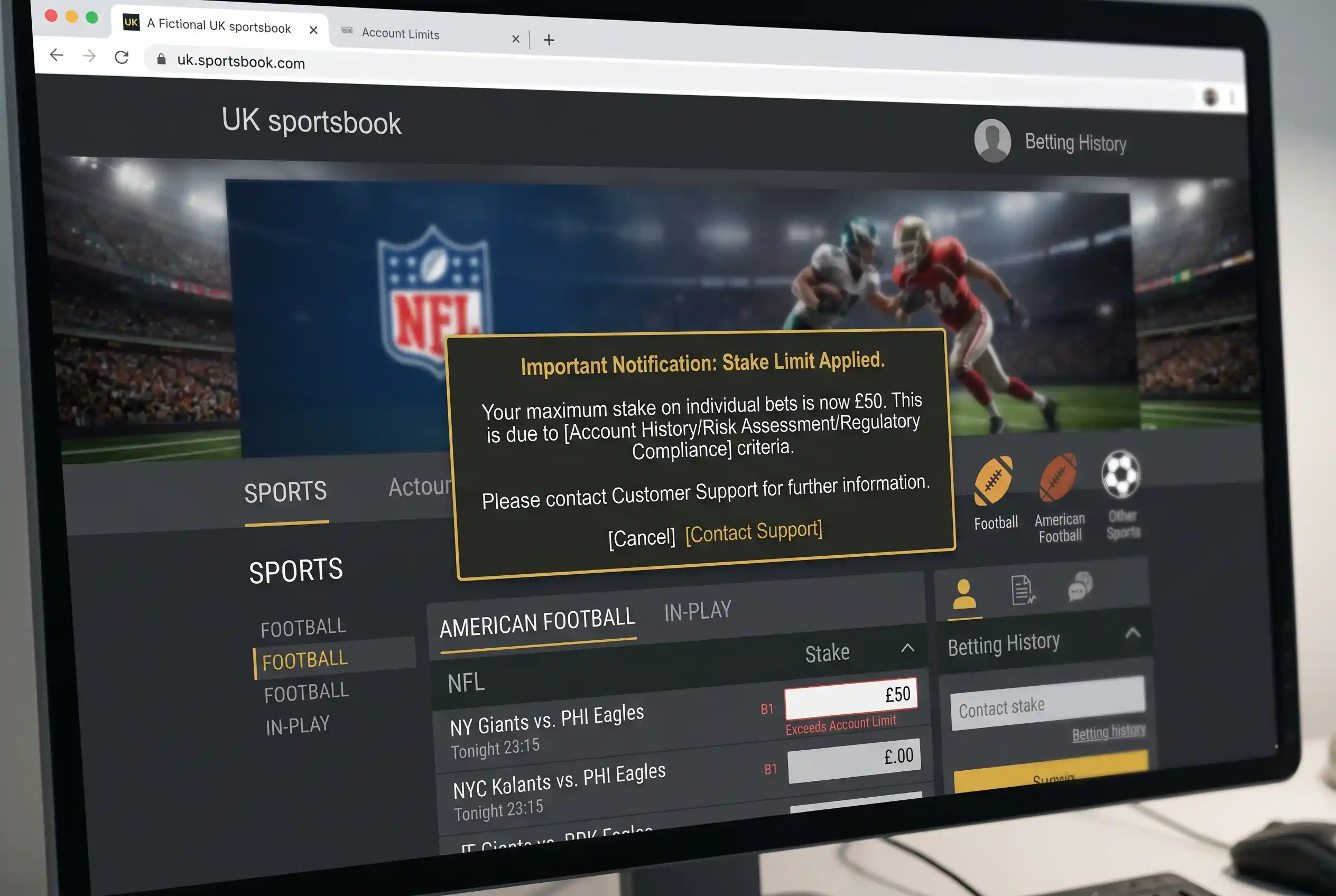
Account restrictions are one of those topics that gets discussed in whispers in betting circles – the frustrating reality that successful bettors eventually encounter. I’ve seen it from both sides over nine years: the sudden stake limit on an NFL spread bet you’ve been placing without issue for months, the promotional exclusion that follows a profitable run on player props, the quiet maximum on a moneyline that was previously uncapped. The UK online betting market now generates over £7.8 billion in gross gambling yield annually – and that scale means bookmakers manage risk with precision. Understanding the mechanics helps you navigate the restrictions that inevitably come with a long record of informed betting.
Reasons for UK Bookmaker NFL Account Limits
Bookmakers restrict accounts for one underlying reason: profit protection. A bettor who consistently finds better value than the bookmaker has priced creates a net liability over time. The bookmaker’s business model is built on the assumption that the aggregate of customer betting produces a return in the bookmaker’s favour. Customers who disrupt that assumption – by consistently identifying mispriced lines, by exploiting promotions systematically, or by placing high-volume bets that move the platform’s own market position – represent a different risk profile from the recreational majority.
NFL betting specifically creates a few dynamics that accelerate restriction triggers. The sport’s well-defined structure – published injury reports, statistical analytics, documented situational trends – means analytical bettors have more publicly available information to work with than in many other sports. A punter who consistently bets on injury-adjusted spreads and covers at above-market rates is demonstrably using information effectively, and bookmaker risk management systems are calibrated to flag this pattern.
Promotional exploitation is a separate trigger. Customers who open accounts specifically to claim welcome offers and then place qualifying bets at the lowest possible odds before withdrawing, or who systematically back the “value” side of an enhanced odds promotion without any recreational betting history, are identified and restricted from future promotional eligibility. This is widespread practice at UK bookmakers and is not limited to NFL – but the relatively niche nature of NFL betting at some platforms means unusual patterns show up more quickly against the baseline than in high-volume sports like Premier League.
Types of Betting Restrictions: Stake Limits, Withdrawal Holds and Market Exclusions
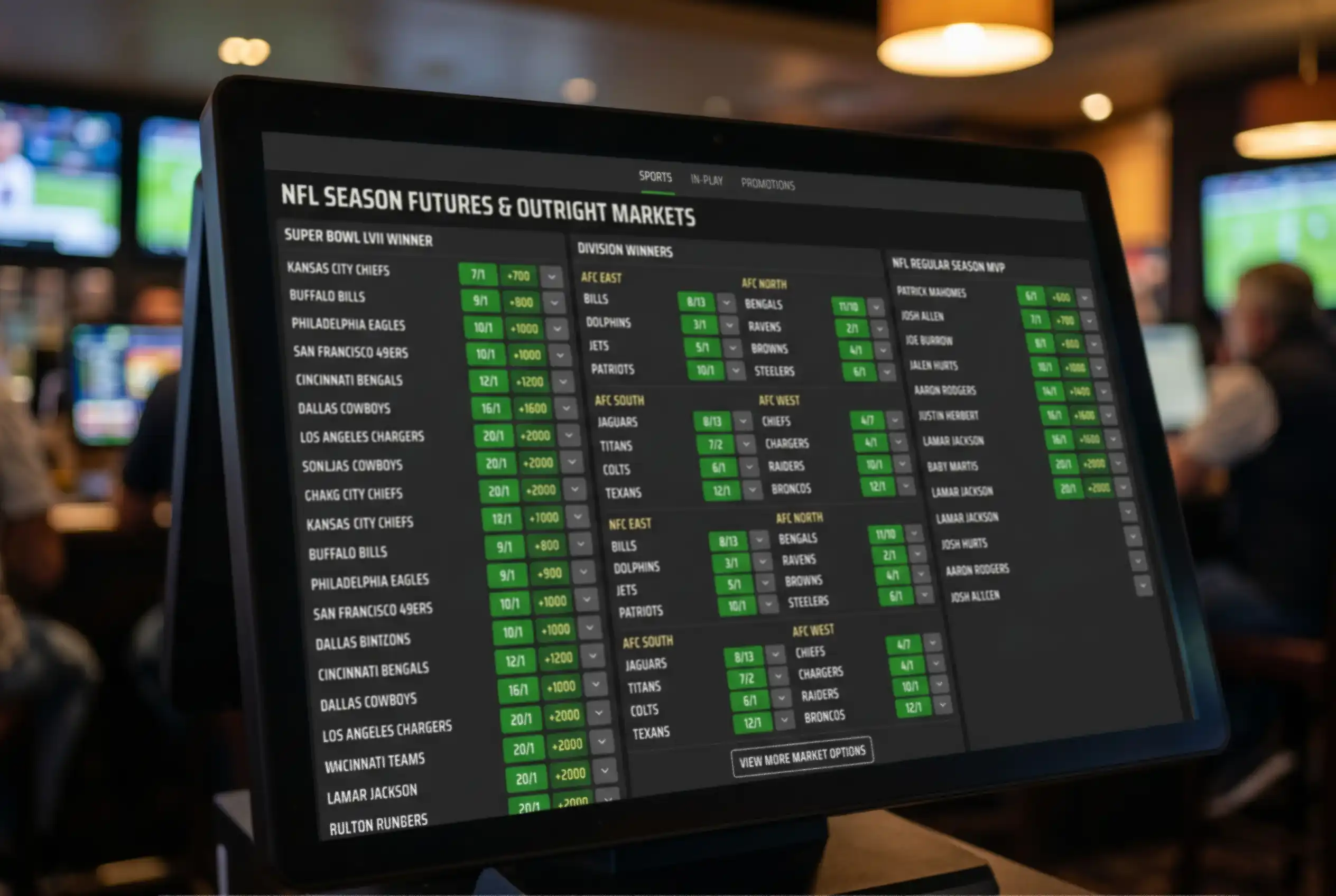
Stake limits are the most common restriction: a maximum bet amount applied to specific markets, typically without explicit notification. You discover them when you try to place your standard stake and find the bet slip’s maximum has been lowered. The limit may apply to a specific sport, a specific market type (player props are often restricted before main spread markets), or the account globally. Most UK bookmakers don’t proactively tell you when stake limits have been applied – the change appears silently in the bet slip functionality.
Promotional exclusions follow a different timeline: you’re simply no longer eligible for the seasonal offers, enhanced odds, and accumulator bonuses that appear to other customers. The platform continues to accept your bets at standard prices – it just treats your account as outside the promotional ecosystem. This can significantly reduce the effective return from an NFL betting account if promotions were a meaningful component of your strategy.
Market exclusions remove specific bet types entirely. An account that has been profitable on NFL player props may find that market removed or priced differently – wider margins, lower maximum stakes, or no available market at all – while still offering normal access to NFL spread and total markets. The segmentation is precise enough to identify exactly which market type has been generating losses for the bookmaker rather than restricting the customer broadly.
Withdrawal holds and enhanced verification are occasionally applied to accounts that have won significantly. Requests for proof of funds, proof of source of wealth, or enhanced identity documents can delay withdrawals while the bookmaker’s compliance process runs. These are legally required in some cases under anti-money laundering obligations, but they can also be used as friction tools against high-winning customers. If your withdrawal request triggers a verification process, providing the requested documentation promptly is the fastest path through it.
How to Reduce the Risk of NFL Account Restrictions at UK Bookmakers
This is where I’m going to be honest about the limits of the advice available: if you bet analytically and win consistently, restrictions will eventually come. The strategies below reduce the pace and severity of restrictions rather than eliminating the possibility entirely.
Maintaining variety in your betting activity across market types, stake sizes, and game selection reduces the clarity of the “sharp bettor” pattern that triggers automated risk systems. A customer who bets exclusively on one specific market type at one specific stake size every week is a more easily identified pattern than one who varies across spreads, totals, and occasional props at different stake levels. That variation doesn’t require abandoning your analytical approach – it just means not making it artificially simple for the risk system to categorise you.
Avoiding systematic promotional exploitation is more straightforward: don’t structure your betting around the mechanics of extracting promotional value independent of actual analytical positions. If you’re betting primarily because of the enhanced price rather than because you genuinely want the bet at any price, that pattern is identifiable and accelerates restriction timelines.
Splitting your volume across multiple accounts is the most reliable long-term mitigation. With three or four active UKGC-licensed accounts, a restriction at one platform doesn’t end your NFL betting. It redirects your activity to platforms where your history isn’t yet known. This is common practice among experienced analytical bettors and is completely legal under UK regulation.
Which UK NFL Sportsbooks Are More Tolerant of Winning Bettors?
The honest answer here is that this shifts over time and varies by market type, and any specific claim about a platform’s current tolerance level would be outdated within a season. The structural differentiator is business model: bookmakers that operate a market-making model – where their profit comes from matching opposing bets rather than from holding one-sided positions – are structurally less threatened by individual winning bettors. Bookmakers that operate primarily on the basis of beating their customers on accumulated margin are more inclined to restrict.
Exchanges – platforms that match bettors against each other rather than providing the price themselves – are the most restriction-free environment for NFL betting, because the exchange operator doesn’t care which side wins. They profit from commission on matched bets. The trade-off is that NFL market liquidity on exchanges is lower than at traditional bookmakers, particularly for prop markets and for less prominent games. For main spread and total markets on the featured games, exchange liquidity is adequate for moderate stakes. For deeper coverage of the full landscape of UK NFL betting platforms, the best NFL betting sites UK guide includes evaluation of restriction practices as part of the long-term account quality assessment.
Frequently Asked Questions
Is it illegal for a UK bookmaker to limit my NFL bets without notice?
No, it is not illegal. UK bookmakers are commercial entities operating under their terms and conditions, which almost universally include the right to refuse or limit bets at their discretion. The UKGC regulates many aspects of bookmaker conduct but does not require operators to accept bets from all customers at unlimited stakes. The right to limit accounts is contractual, and the bookmaker is within their legal rights to apply stake restrictions without specific advance notice, provided they continue to settle existing bets according to their terms.
Can I dispute an NFL betting account restriction with the UKGC?
The UKGC does not adjudicate commercial disputes between bookmakers and customers about stake limits or promotional exclusions. These are business decisions within the bookmaker’s contractual rights. If you have a complaint about how existing bets were settled, or believe a platform has breached its licence conditions, you can report this to the UKGC or raise it through an Alternative Dispute Resolution (ADR) scheme. For stake limitation decisions specifically, the bookmaker’s own customer service is the first step – some restrictions can be reviewed and adjusted, particularly if the reason was automated risk flagging rather than a deliberate policy decision.
What is a ‘gubbed’ account and does it happen often to NFL bettors in the UK?
‘Gubbed’ is betting slang for an account that has been restricted – typically applied specifically to promotional exclusions, where an account is removed from bonus eligibility. The term is widely used in UK betting communities. It happens most often to customers who bet systematically on enhanced prices and promotions, or who have a significant winning record in a specific market. For NFL betting, gubbing most commonly affects prop market accounts and promotional-focused bettors. It’s more common among experienced bettors than complete newcomers, and most UK sports bettors who engage regularly will encounter some form of restriction within a few seasons of consistent wagering.
Created by the ”nfl Games Betting” editorial team.